Profiles as Trust Infrastructure in Law

Firm & Attorney Profiles: The Trust Layer of AI-Era Legal Marketing
Attorney profiles are not simply digital marketing pages. They are structured authority records that artificial intelligence systems use to validate lawyers as real, credible entities. When a potential client searches for legal representation, modern search algorithms rely on these profiles to provide identity signals, authority signals, reputation signals, and structured legal data. Without these critical signals, an AI system has far less confidence recommending your firm.
For small to medium-sized law firms, adapting to this shift in search technology is essential. Trust determines whether a consumer will even reach out in the first place. By transforming your online profiles into robust trust infrastructure, you can boost firm efficiency, reduce administrative overhead, and ensure a steady pipeline of qualified leads.
This guide will explore why attorney profiles are the most undervalued asset in legal marketing. We will break down how structured data powers AI search, how profiles solve the digital identity problem, and what specific elements you need to build a high-authority digital presence.
1. The Role of Structured Data in AI Search
Artificial intelligence search engines do not read the internet like humans do. Instead, large language models (LLMs) and search algorithms seek out structured, validated sources of information to answer user queries accurately. When a user asks an AI to find a local attorney, the system immediately looks for standardized data points to verify a lawyer’s credentials.
Your attorney profiles on established legal directories provide this exact type of structured data. These platforms organize your professional information in a way that AI can effortlessly parse and understand. Essential data points include your current bar status, specific practice areas, physical office locations, awards & honors, reviews from legal clients and attorney peers, publications, professional credentials, and more.
When your firm maintains complete and accurate profiles across multiple platforms, you feed AI systems the structured data they crave. This seamless data transfer allows algorithms to quickly categorize your firm, understand your specific expertise, and confidently match you with prospects seeking those exact legal services. This process significantly streamlines client acquisition and helps maximize billable hours.
2. How Profiles Solve the Identity Problem
Before an AI system can recommend your law firm, it must verify your digital identity. The internet is filled with conflicting data, outdated websites, and unverified claims. AI systems need absolute confirmation of who a lawyer is, where they practice, and what they specialize in before presenting them to a prospective client.
Attorney profiles act as verified identity anchors across the web. When your firm claims and standardizes its firm and attorney profiles on major legal directories, local business pages, and professional networks, you establish a unified digital identity. The AI algorithm cross-references your website with these third-party profiles. If the information matches, the system registers your firm as a verified, legitimate entity.
Failing to secure these identity anchors causes algorithmic confusion. If an AI finds one practice area listed on your website but a completely different focus on a legal directory, it loses confidence in your identity. By maintaining accurate profiles, you solve the identity problem and adapt to legal changes in search behavior, ensuring your firm remains highly visible to the clients who need you most.
3. Attorney Profiles as Authority Hubs
Establishing your digital identity is only the first step. To outrank competitors, your firm must demonstrate clear, undeniable authority in your specific legal field. A well-optimized attorney profile functions as a centralized authority hub, aggregating all of your professional achievements into one easily scannable record.
A strong profile does not just list basic contact information. It aggregates your industry awards, published articles, client reviews, peer endorsements, professional affiliations, and more. When you consolidate these elements onto a high-authority domain like a trusted legal directory, you create what search engineers call “authority density.”
AI systems measure this density to gauge your level of expertise. A profile rich with verified credentials and peer validations acts as a powerful signal of competence. This third-party verification proves to the algorithm that you successfully handle complex cases and enhance client outcomes. Consequently, the AI is far more likely to recommend your services over a competitor with a sparse, unverified digital presence.
4. The Visibility Multiplier Effect
Investing time into building robust attorney profiles creates a powerful visibility multiplier effect. The benefits of a highly optimized profile extend far beyond a single legal directory or search engine.
First, strong profiles directly influence traditional search engine rankings. High-authority legal directories frequently rank on the first page of search results for specific legal queries. By maintaining a top-tier profile on these sites, your firm essentially borrows their domain authority to capture more search traffic.
First, strong firm and attorney profiles with increasing inclusion across authoritative legal directories directly influence traditional search engine rankings. Second, high-authority legal directories frequently rank on the first page of search results for legal services queries. By maintaining a top-tier profile on these sites, your firm is improving your own local and organic search visibility alongside the visibility you have by being part of these legal directories that likewise are routinely found on page one of search results alongside law firms.
Third, this authority feeds directly into AI answers and conversational search recommendations. As smart assistants and AI chatbots become primary search tools, they rely on the aggregated data from your profiles to generate their responses. Furthermore, a credible, professional profile builds immediate client trust and strengthens your referral networks, as other attorneys can easily verify your credentials before sending a client your way.
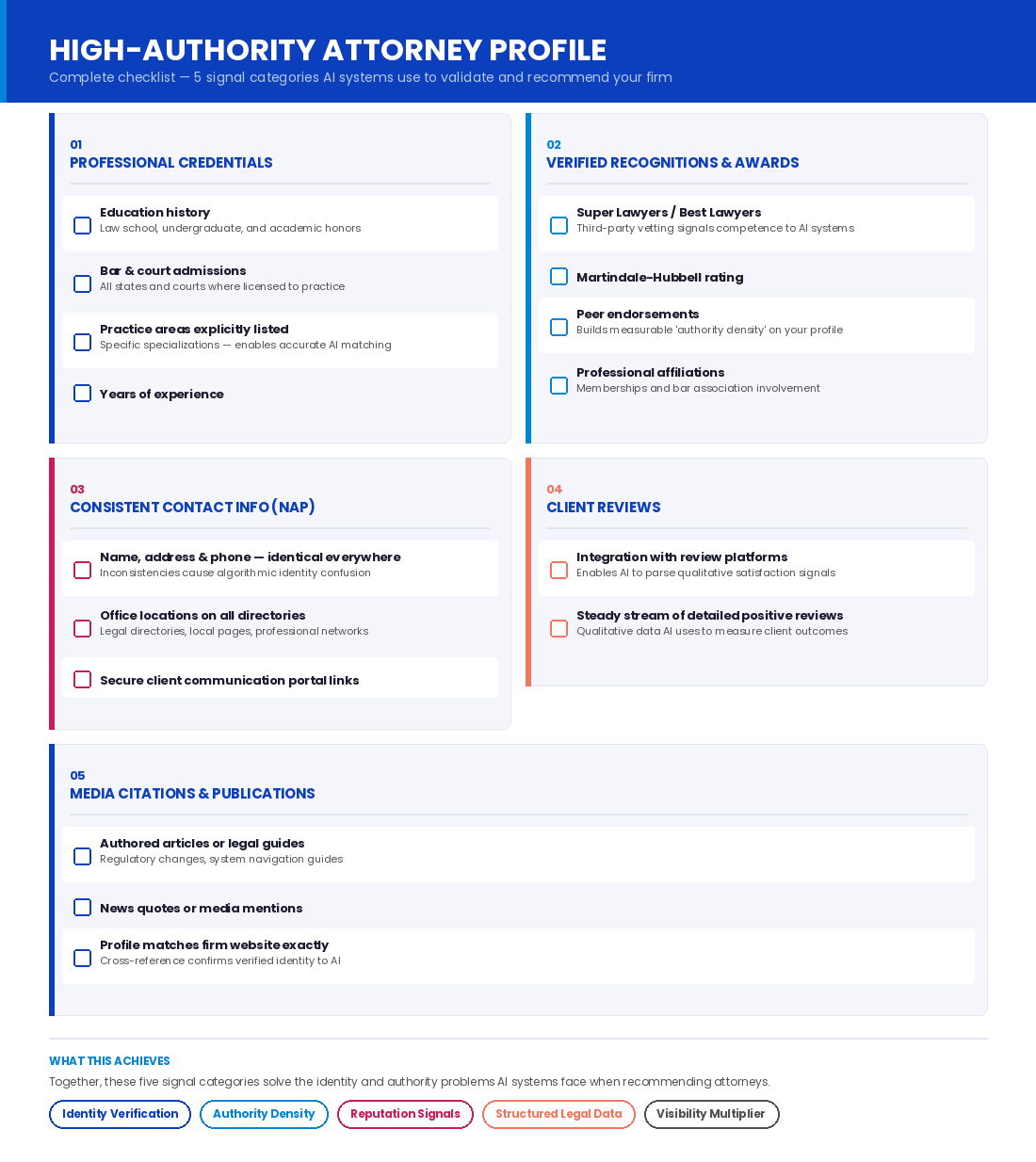
5. What a High-Authority Profile Includes
Building profiles that serve as true trust infrastructure requires attention to detail. To ensure AI systems and potential clients view your firm as a highly credible authority, your profiles must include the following critical elements.
Complete Professional Credentials
Do not leave any fields blank. Provide a comprehensive overview of your education, bar admissions, court admissions, years of experience, and more. Explicitly list all of your specific practice areas so search engines, consumers, and AI systems can accurately categorize your expertise and match you with relevant client queries.
Verified Recognitions and Awards
Industry awards serve as definitive third-party validation. Include all relevant recognitions, such as Super Lawyers, Best Lawyers, Martindale-Hubbell ratings, etc. These awards prove to AI algorithms that reputable organizations have vetted and approved your legal skills.
Consistent Contact Information
Your Name, Address, and Phone number (NAP) must be consistent across every single profile on the internet. Ensure contact information like your office address, phone number, and links to your secure client communication portals are identical everywhere. This consistency is the foundation of digital trust.
Review Integration
Client and peer feedback provides the qualitative data that AI systems use to measure client satisfaction and perceived industry expertise among peers. Ensure your profiles are routinely capturing client and peer positive review and feedback. A steady stream of positive, detailed reviews highlights your ability to secure favorable results and resolve complex legal matters efficiently.
Media Citations and Publications
If you have authored articles on regulatory changes, published guides on navigating the legal system, or been quoted in local news outlets, link these citations to your profile. Media mentions and published works heavily reinforce your status as a subject matter expert.
Securing Your Digital Foundation
Firm and attorney profiles are the foundational trust infrastructure of the modern legal market. By treating these platforms as structured authority records rather than passive marketing pages, your firm can dictate exactly how AI systems perceive your expertise.
Take the time to audit your current online profiles. Claim missing listings, standardize your contact information, and flesh out your professional credentials. By building strong digital ratings, reviews, recognitions and roots about your firm and attorneys, you empower your firm to adapt to shifting search trends, attract higher-quality cases, and ultimately maximize your billable hours.