The New Rules of Search Visibility for Law Firms

For years, the path to online visibility for law firms was relatively singular: choose the right keywords, publish content containing those keywords, and acquire backlinks. While these fundamentals remain relevant, the landscape of digital search has fundamentally shifted. The introduction of Artificial Intelligence (AI) into search algorithms, particularly through AI search or technologies like Google’s Search Generative Experience (SGE), has rewritten the rules of engagement.
It is an unfortunate fact that many law firms relying on SEO strategies from the past can see their visibility decline. Search engines are no longer just indexing libraries of links; they are becoming answer engines that synthesize information to solve user problems directly. For attorneys at small to medium-sized firms, this shift presents both a challenge and a significant opportunity. Adapting to these new rules is not merely about technical compliance—it is about positioning your firm as the definitive authority in your practice area.
This article outlines the new rules of search visibility, exploring how AI is reshaping legal search and providing actionable strategies to ensure your firm remains visible, relevant, and accessible to the clients who need you most.
Rule 1: Context Over Keywords
In the past, ranking high often meant repeating specific phrases like “Chicago divorce lawyer” frequently enough to signal relevance. Today, search algorithms are sophisticated enough to understand semantic context. They analyze the intent behind a search query rather than just the literal words used.
AI-driven search engines aim to mimic human understanding. When a potential client asks, “What happens to my business during a divorce?”, the search engine looks for content that provides a comprehensive, nuanced answer.
To adapt, firms must shift their content strategy from keyword targeting to topic authority. This involves:
- Answering Complex Questions: Develop content that addresses specific, multi-layered client problems. Instead of a generic page on “Personal Injury,” create detailed guides on “Steps to Take Immediately After a Commercial Truck Accident.”
- Natural Language: Write as you speak. AI models are trained on natural human communication. Content that flows naturally and uses everyday language is more likely to be cited by AI search tools as a trustworthy answer.
- Comprehensive Coverage: Short, thin content is increasingly ignored. Search engines favor “pillar pages” or comprehensive guides that cover a topic in depth, signaling to the algorithm that your site is a definitive resource.
Rule 2: E-E-A-T is Non-Negotiable
Trust has always been critical in legal marketing, and today it matters more than ever. Search engine like Google evaluates content based on E-E-A-T: Experience, Expertise, Authoritativeness, and Trustworthiness. In the legal sector, which Google classifies as “Your Money or Your Life” (YMYL), the standards are held high.
An AI search engine needs to verify that the advice it surfaces comes from a credible source. If your website lacks clear signals of expertise, you will struggle to rank, regardless of your technical SEO efforts.
Demonstrating Experience and Expertise
Your digital presence can prove that you are not just a content publisher, but a practicing attorney with real-world experience.
- Detailed Attorney Bios: Move beyond generic bios. detailed your specific experience, landmark cases, and years in practice.
- Author Bylines: Ensure every blog post and article on your site is attributed to a specific attorney, with a link back to their bio.
Building Authority and Trust
- External Validation: Awards, peer reviews, and board certifications should be prominent. Badges from Martindale-Hubbell or Super Lawyers serve as digital trust signals.
- Citing Sources: When discussing statutes or case law, link to reputable government (.gov) or educational (.edu) sources.
Rule 3: Local Visibility is the New Homepage
For small and medium-sized law firms, the battle for visibility is won or lost locally. AI search results are increasingly hyper-local, prioritizing businesses that are geographically relevant to the user. Often, a potential client will never visit your website’s homepage; they will decide whether to contact you based entirely on your Google Business Profile (GBP) or a local map result.
Optimizing for local visibility requires a rigorous approach to data consistency and reputation management.
The “Near Me” Factor
Search engines use proximity as a primary ranking factor. To maximize your reach:
- NAP Consistency: Your Name, Address, and Phone number (NAP) must be identical across every platform—from your website footer to your profiles on Avvo, Yelp, and legal directories. Inconsistencies confuse algorithms and dilute your local authority.
The Power of Reviews
Reviews are the currency of local trust. They not only influence consumer decisions but also feed the AI’s understanding of your firm’s reputation. A steady stream of fresh, detailed reviews signals to search engines that your firm is active and trusted by the community.
Rule 4: Structured Data Speaks the Language of AI
While human readers care about your persuasive writing, search engines need help understanding the structure of your data. Structured data, or schema markup, is code added to your website that explains your content to search engine bots in a language they understand.
In the era of AI search, schema is a powerful tool to control how your firm appears in results. It can help you win “rich snippets”—those highlighted boxes at the top of search results that provide direct answers.
Rule 5: The Multi-Platform Search Journey
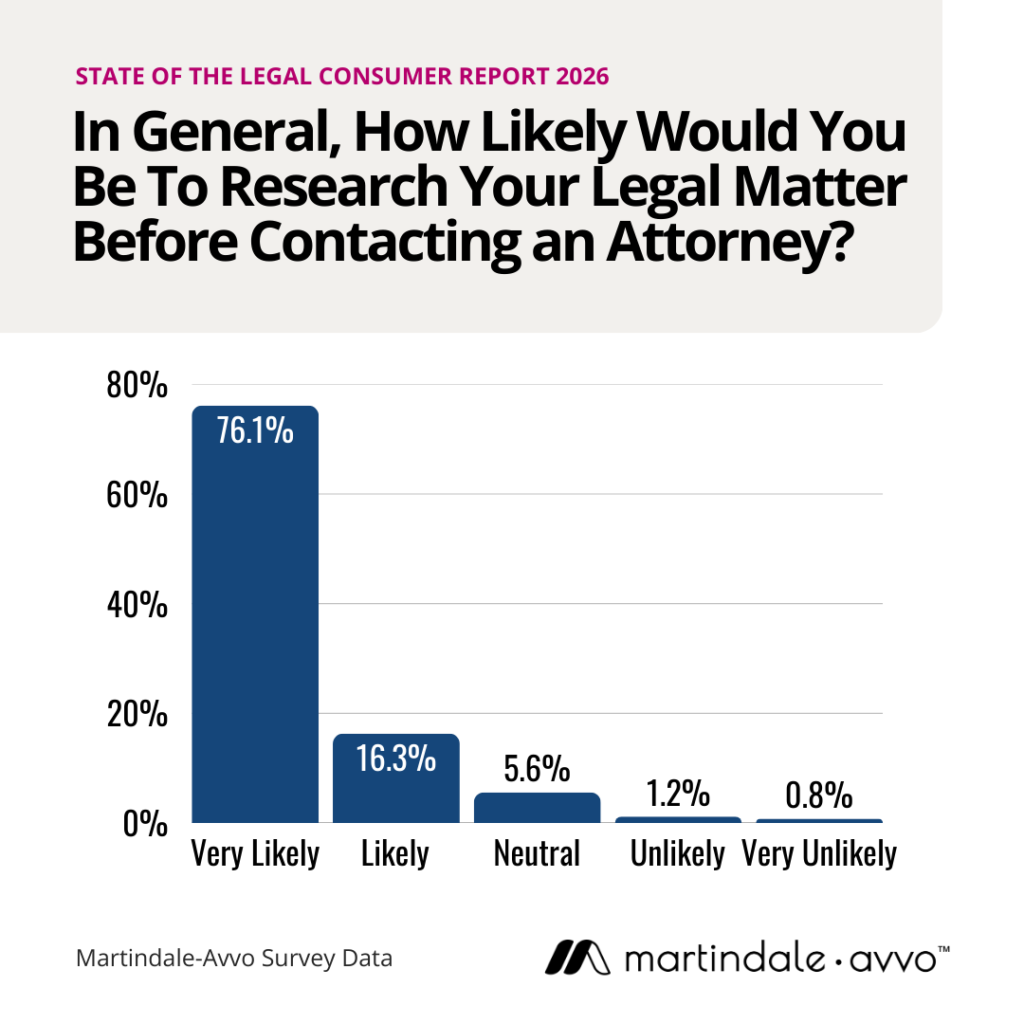
It is a misconception that search visibility begins and ends with Google. In today’s fast-evolving legal market, legal consumer journeys are no longer linear. Prospects typically compare attorneys across multiple sources—profiles, review sites, legal directories, and social media—before deciding who to contact.
AI search engines aggregate data from all these sources to form a composite picture of your firm. If your website says you are a premier litigator, but your profile on a major legal directory is empty or outdated, the algorithm spots a discrepancy.
Holistic Profile Management
To dominate modern search, you must broaden your scope:
- Claim Profiles: Ensure you have claimed and optimized profiles on major legal directories like Lawyers.com.
- Consistent Messaging: Your value proposition should be consistent everywhere. If you pivot your practice area on your website, ensure that change is reflected immediately across all external platforms.
Preparing for the Future
The new rules of search visibility are demanding, but they reward firms that prioritize quality, authenticity, and technical precision. By shifting your focus from chasing algorithms to building genuine authority—through deep content, robust profiles, and structured data—you future-proof your firm against the volatility of AI updates.
For attorneys at growing firms, the goal is not to trick the search engine, but to convince it. You must convince the AI that you are the most trustworthy, experienced, and relevant answer to a client’s problem. Those who master these rules will find themselves not just visible, but chosen.
If you are looking for visibility in client search improvements, Martindale-Avvo can help. Our industry-leading expertise offers you the tools you need to reach and connect with potential clients. Contact us today to learn more about what we can do for your law firm.